
Posts for: #Web-Development

Feature Advertisement: Backend-Driven Frontend Adaptation

Feature Advertisement: Backend-Driven Frontend Adaptation

Hardcoded feature checks scatter across your frontend. Environment differences cause confusion. Deployments mismatch. Every new feature requires frontend updates.

The feature advertisement pattern solves this: backend advertises capabilities, frontend adapts. No feature list maintained on frontend. No environment-specific code. Just ask: “Do you have X?”

Architecture

Backend maintains a feature enum and registry. Configuration controls which features are enabled. Frontend fetches the list once at startup and checks dynamically.

┌─────────────┐  GET /api/features  ┌─────────────┐
│  Frontend   │────────────────────►│   Backend   │
│             │◄────────────────────│             │
│   Adapts    │   {features...}     │  Advertises │
└─────────────┘                     └─────────────┘

Backend: Define Features

# features.py
from enum import Enum

class Feature(str, Enum):
    ADVANCED_SEARCH = "advanced_search"
    EXPORT_PDF = "export_pdf"
    BULK_OPERATIONS = "bulk_operations"
    REAL_TIME_NOTIFICATIONS = "real_time_notifications"

Single source of truth. Backend only.
[Read more]

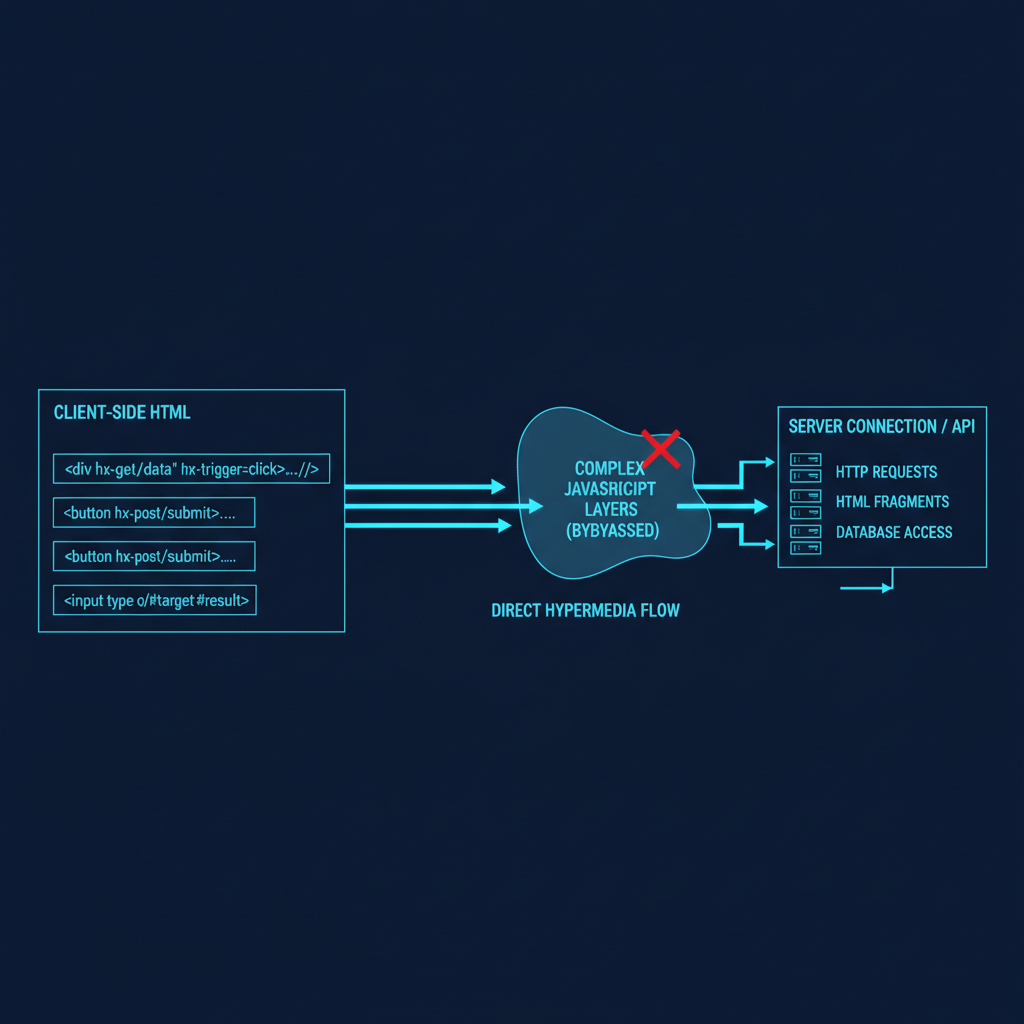
HTMX for AI Interfaces: Simplicity That Scales

HTMX for AI Interfaces: Simplicity That Scales

Modern AI applications demand responsive, real-time interfaces that can handle everything from streaming model outputs to live feature updates. HTMX offers a pragmatic approach to building these interfaces without the complexity of full JavaScript frameworks - particularly valuable when your team’s expertise lies in ML engineering rather than frontend development.

The Challenge: AI UIs Without Frontend Complexity

Building interfaces for AI systems presents unique challenges:

  • Streaming responses from large language models
  • Real-time visualization of training metrics
  • Dynamic form updates based on model predictions
  • Live collaboration on annotation tasks
  • Progressive disclosure of complex model outputs

Traditional approaches require substantial JavaScript expertise. HTMX changes this equation by extending HTML’s capabilities directly.

[Read more]